



Adulting 101 — Post Secondary Transitions and Finding Your Passion

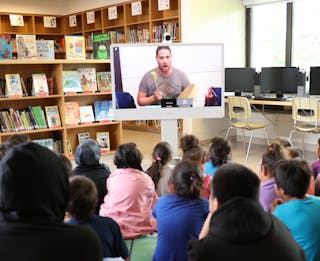
What are you going to do when you grow up? It’s a question many teens grapple with and one that Connected North set out to help answer. Terri Grant, a Red River Métis descendant, hosted a panel called Adulting 101, featuring three panelists: Mackenzie Demerah, Tessa Antone, and Robyn Boulanger. Students tuned in from communities across the North, including Baker Lake, Chesterfield Inlet, and Grise Fiord, to hear firsthand about the post-secondary and career journeys of three Indigenous speakers sharing their stories.
“Post-secondary education is not linear, and you definitely don’t have to be on a specific timeline” — Mackenzie Demerah
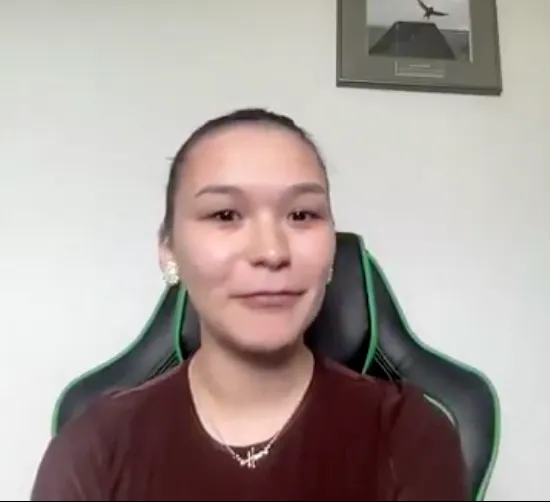
Mackenzie Demerah grew up in Kugluktuk, Nunavut, and now lives in Edmonton. Her path wasn’t straightforward and that’s exactly the point. She initially attended the University of Calgary through the Indigenous Student Access Program, then took a year off to return home and work as a substitute teacher in her community. Later, she applied to the Indigenous Student Success Certificate at the University of Lethbridge, where she is now in her third year of a social science bachelor’s degree.
Looking back, Mackenzie shares that she wishes she had known how long it can take to adjust, whether it’s budgeting, studying, or building friendships. She also emphasizes that homesickness comes and goes, and that’s completely normal.
Her second attempt at post-secondary felt different. She returned more motivated, knowing she would have time to reconnect with home during the summers. With support from a student support teacher and access to programs that helped cover application fees, she found her footing.
Her advice to her Grade 11 self? Connect with people who have gone through post-secondary and let teachers know you’re interested. And most importantly:
“Say yes to everything to find out what you like, take care of yourself, put yourself out there, and connect with other people.”
“Find your passion. Knowledge is a gift” — Tessa Antone

Tessa Antone, originally from Squamish and now living in North Vancouver, also experienced challenges early in her post-secondary journey. After struggling in her first year at UBC, she was encouraged by counsellors to explore NITEP, the Indigenous Teacher Education Program — a decision that reshaped her path.
Her journey included taking time away from school, once to travel to Australia and again during the pandemic, but she persisted and completed her program. Today, she has taught for a year and is now part of a Squamish language immersion program.
Reconnecting with language and culture has been deeply meaningful for Tessa. Through her dance group, she experiences intergenerational mentorship, using language with people ranging from toddlers to Elders. She highlights how finding community at the First Nations House of Learning opened doors to support, guidance, and scholarships. Staying connected to the land also played an important role in her well-being while away at school.
When it came time to apply to university, her sister and high school English teacher were key supports. Her advice to Grade 11 students is simple: say yes to opportunities as it will help you discover what you like and what you don’t.
“I strongly believe basketball is medicine” — Robyn Boulanger
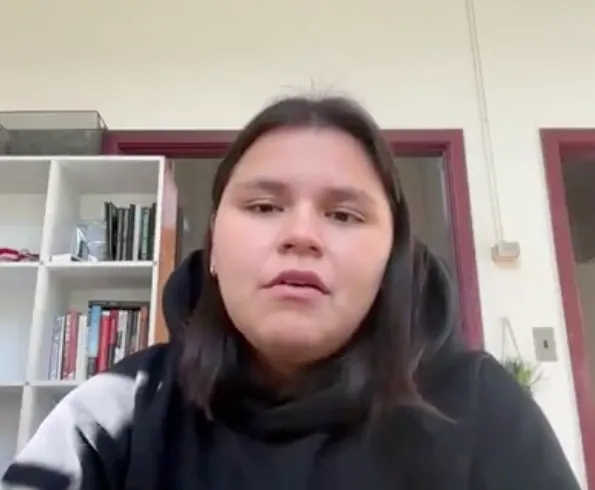
Robyn Boulanger, whose spirit name is Rolling Butterfly Woman, is from Berens River First Nation and now lives in Winnipeg. A passionate athlete, she played basketball throughout high school and became a student-athlete at the University of Winnipeg.
Her academic journey included a degree in physical health and education, followed by a teacher training program, and later a master’s degree in Indigenous Education at UBC. She has dedicated her career to supporting Indigenous youth and coaching basketball. While she was accepted into a Master of Coaching program at the University of Victoria, she is currently working as an Indigenous graduation coach in Winnipeg.
“I’m always a learner, and I’m always going to be a learner no matter what stage of life I’m at.”
Reflecting on her post-secondary experience, Robyn shares that she wishes she had reached out more to available supports, such as the Aboriginal Student Centre. Basketball played a key role in keeping her grounded and connected throughout her studies.
Supported by her sisters and her high school coach during the application process, she encourages students to reflect on what they are passionate about because there is likely a career connected to it. She also emphasizes the importance of maintaining a growth mindset.
In closing, she reminds students:
“Stay connected to your community and culture throughout your program, and stay in balance with the medicine wheel.”
Panels like these give students in Connected North classrooms a chance to see what’s possible. By connecting with Indigenous mentors and hearing real-life journeys, students gain both practical advice and inspiration for their own futures.
They may not yet know exactly what they want to do when they grow up — but they leave with new ideas, new connections, and a renewed sense of possibility.