


Connected North · Indigenous Knowledge · Land-Based Learning
Meet Manoomin: Rhonda LeClair Shares Wild Rice Teachings
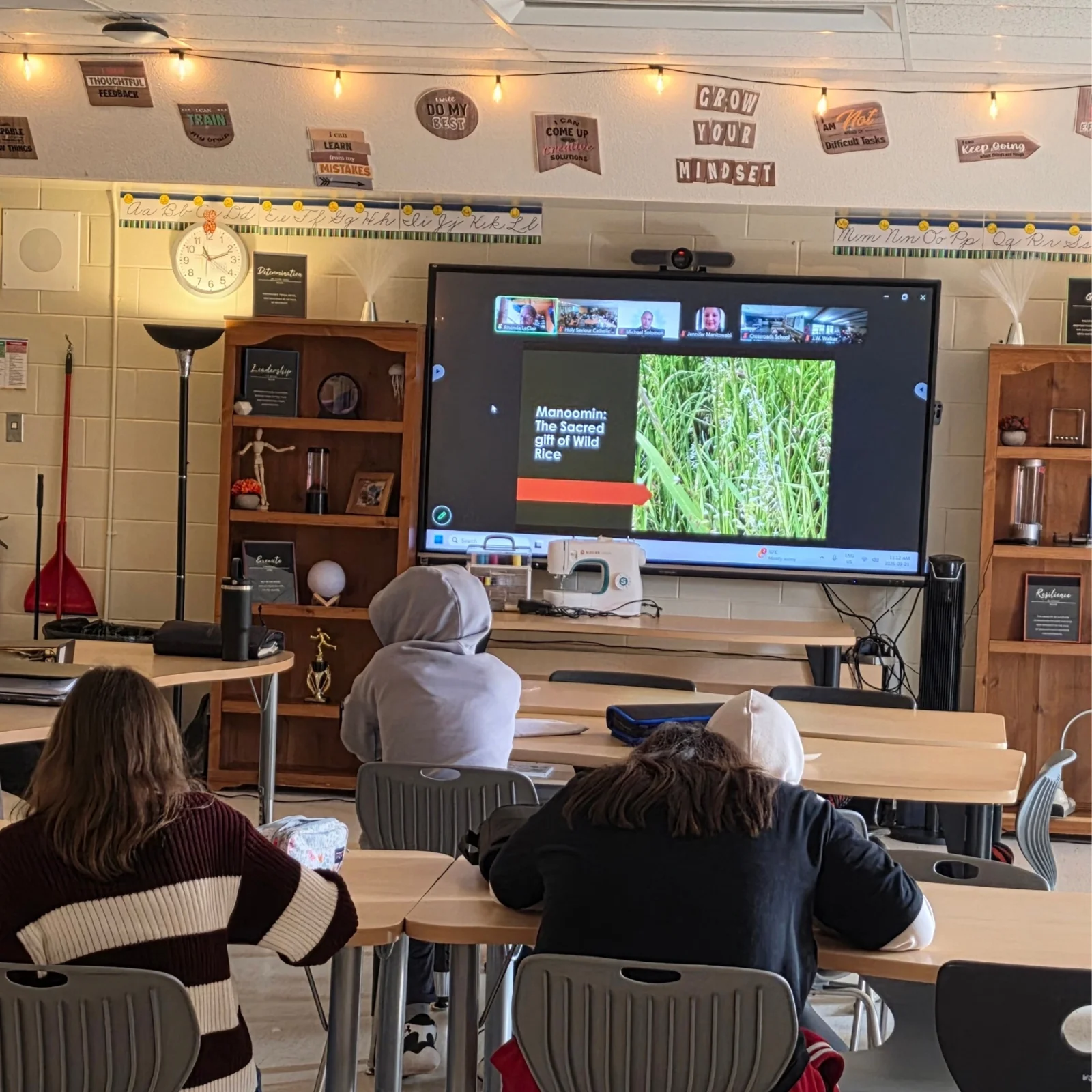
“Meet Manoomin,” Rhonda LeClair encouraged students as she shared her teachings online. Rhonda and Jennifer Manitowabi joined students from 16 schools for a special premium session, Manoomin, the Sacred Gift of Wild Rice, hosted by Connected North team member Michael Solomon.
Rhonda is an educator who also teaches people about harvesting wild rice in her spare time. Jennifer travelled five hours from her community in Lac Seul to join Rhonda at her home near Thunder Bay, Ontario, for the session. Rhonda opened by smudging herself and her tools.
Rhonda shared teachings about Manoomin and its importance to the Anishinaabe people. She described this sacred gift from the Creator and the principles that guide her work: respect for the plant and relationships with the land, the plant, and each other. She emphasized giving thanks for the harvest and sharing its abundance with others, including other than human relatives. The first handful of rice is prepared ceremonially to give thanks.
“It is a living being. It is our relative. It is there to nourish us and to love us.”
For Rhonda, harvesting wild rice is a family tradition. By passing on what she knows, she helps prepare the next generation of harvesters. Harvesting also has economic value: wild rice can be traded for moose meat or fish.
Rhonda showed students beautiful photos of Whitefish Lake, where wild rice grows. She discussed the plant’s anatomy and life cycle, as well as its role in the creation story she shared. She explained that wild rice is central to her identity and valued for its medicinal properties. Her care for Manoomin continues throughout the year, as she gives thanks to the plant and helps it flourish. Before the harvest, elders lead a ceremony with prayers and songs for a good harvest.
Students also learned about the equipment and teamwork involved in gathering wild rice. After offering tobacco into the water, harvesters work in pairs, with one person paddling and the other collecting rice. As she harvests, Rhonda sings and reseeds for future harvests. She also described making medicines and teas from Manoomin roots. While on the water, she observes nearby animals, looking for signs of what the coming winter may bring.
“Manoomin is such a powerful medicine, right? You’ve just got to talk to it.”
Once harvested, Manoomin is spread on tarps and cleaned of twigs and grasses. It is then parched, or roasted over a fire. Next comes threshing: the rice is danced on to remove the husks without breaking the grains. Finally, it is winnowed and cleaned before cooking.
Jennifer took students on a tour of Rhonda’s dock and equipment, including the machine used for walking on rice. Rhonda then answered their questions about harvesting and processing Manoomin. Jennifer and Rhonda share the same big dream: helping their relative Manoomin survive. By sharing these teachings, they are helping students learn how to protect its habitats.
Through their time with Rhonda, students explored Manoomin’s cultural significance, the practices involved in harvesting and preparing it, and their responsibilities to the environment. The session connected lessons about plants, animals, and geography with an invitation to carry these teachings forward.