


Panorama archive · Culture
UGANDA: Meet the People
Originally published
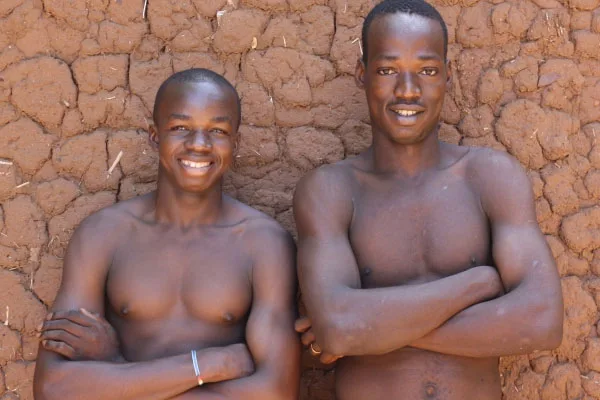
The Republic of Uganda is found in East Africa and is under the multiparty democratic republic governance. It is bordered on the east by Kenya, west by D.R Congo, on the north by the Southern Sudan, and on the south by Tanzania and Rwanda. The country also lies across the equator, and is divided into three main areas—swampy lowlands, a fertile plateau with wooded hills, and a desert region. Lake Victoria forms part of the southern border. Uganda is currently partitioned into 112 districts, having different societies of people living together and cherishing their cultures in different tribes.
Uganda's precolonial history is not well recorded, although some sources detail that Ugandans were hunter-gatherers until 1,700 to 2,300 years ago. A hunter-gatherer is a nomadic society in which most or all food was obtained from wild plants and animals, in contrast to agricultural societies, which rely mainly on domesticated species. There were three main kingdoms in Uganda, each ruled by a monarch under laws and customs of their own. The kingdoms of Buganda, Kitara (sub-divided into Bunyoro and Toro) and Karagwe were all well documented by early explorers. It is believed that these kingdoms originated around the 16th century.
There are four main ethnic groups in Uganda, which all have different origins and specific cultures attached to them.
1.The Bantu, by far the largest in number, originated from the west coast of Africa, migrating along the Niger River, and occupied the central and western parts of Uganda, and some are also found in the eastern part of the country. Some of the tribes include the tribes of Buganda, Banyankole, Basoga, Bakiga, Batoro, Banyoro, Bagisu, Bagwere and Bakonjo.
2.The Nilotics, who came from the north, include the Lango, Acholi, Alur, Padhola, Lulya and Jonam.
3.The NiloHamitics include the Teso, Karamojong, Kumam, Kakwa, Sebei, Pokot, Labwor and Tepeth, and the Sudanics include the Lugbara, Madi and Lendu. The eastern part of Uganda was mostly occupied by the Nilo-Hamitic tribes,who never formed a kingdom because the people were nomadic and the area was not well suited to agriculture.
4.The Hamites, are mostly constituted by the Bahima.
These tribes engaged in the long distance trade with the Arabs and some of their neighbors.
The first European who set foot in Uganda in 1862, was John Hanning Speke,a British explorer who was interested in establishing the source of the Nile. Following religious wars between converted Protestants and Anglicans in Buganda, a British protectorate administration took control of the region in 1896. Independence movements of the 1950s came to fruition in 1962 when Uganda was granted self-rule. In 1971 a military coup toppled the country's first government. Army commander Idi Amin took control, looting the country and killing opponents and members of their tribes. After eight years of Amin's misrule, Uganda was an economic and social disaster. Thousands starved to death.
Guerrilla war and human rights abuses under Milton Obote from 1980 to 1985 claimed the lives of many people. The rule under current president Lt. Gen. Yoweri Kaguta Museveni, who seized power in 1986, has brought relative stability and economic growth to Uganda.
Uganda is a unique country blessed with 56 tribes and indigenous communities that were formally recognized in the 1995 constitution amendment of 2005.
English is the official language of Uganda, although Luganda and Swahili are also widely spoken in most parts of the country. There is also French, German and Arabic taught in institutions. The Asian population has also been increasing in the recent years, and therefore most Asian languages are also spoken.
The constitution (amendment) act 2005 added the following indigenous communities in Uganda: Aliba, Aringa, Banyabutumbi, Banyaruguru, Barundi, Gimara, Ngikutio, Reli and Shana.
In the next editions of Uganda's culture, we will go deep into learning about cultures, values or norms of specific tribes in Uganda and I know you will love to know more about these people!