

Panorama archive · Human Rights
Child Labour, A Menace to Our Nation
Originally published
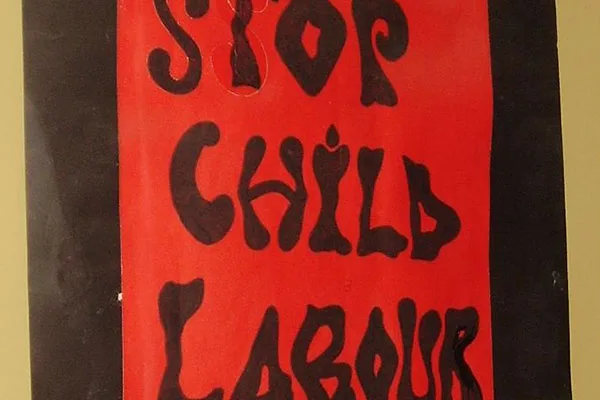
A study conducted by International labour Organisation (ILO) discovered that 246 million children are involved in child labour in 2002. 179.4 Million Children are involved in the worst forms of child labour (including hazardous work, and the “unconditional worst forms”—slavery, debt bondage, soldiering, prostitution and pornography, and illicit activities). Two-thirds of children involved in the worst forms of child labour are between the ages of 5 and 14. This is really pathetic.
The term ‘Child Labour’ is often defined as work that deprives children of their childhood. It deprives them of the opportunity to attend school. Some organization believes child labour takes place when one or more of these characteristics are in place and they are:
- Violation of a nation’s minimum age laws
- Threats leading to children’s physical, mental, or emotional well-being
- Involvement of intolerable abuse, such as child slavery, child trafficking, debt bondage, forced labour, or illicit activities
- Prevention of children from going to school
- Usage of children to undermine labour standards
The vast majority (70%) of child labour around the world occurs in agriculture, fishing, hunting, and forestry. Most children working in agriculture are producing for local, domestic markets. But millions of these children are involved in some facets of planting, harvesting, or processing agricultural commodities for export. For example, plantations that produce commodities exclusively for export employ 20 million people around the world; an estimated 12% of these plantation workforces are children. In countries such as Brazil, Kenya, and Mexico, studies have shown that children under 15 make up25-30% of labor forces in the production of plantation commodities. Around the world, millions of children play roles in producing cocoa, coffee, cotton, flowers, fruits and vegetables, sugar, tea, tobacco and many other commodities traded on world markets. ( Rigged Rules and Double Standards: Trade, Globalisation, and the Fight Against Poverty (London: Oxfam, 2002), 34. U.S. Department of Labor, By the Sweat and Toil of Children, Volume II: The Use of Child Labor in U.S. Agricultural Imports & Forced and Bonded Child Labour (Washington, DC: U.S. Department of Labor, 1995), 2, 25 [hereinafter By the Sweat and Toil of Children Vol. II].)
Over 2.5 million children are used in Industrialized Economies, 2.4 million children in “Transition” Economies, 127.3 million children in Asia and the Pacific, 17.4 million children in Latin America and the Caribbean, 48.0 million children in Sub-Saharan Africa and 13.4 million children in Middle East and North Africa (ILO estimates of economically active children (age 5-14) in 2000)
Poverty is one of the most frequently cited factors contributing to the persistence of child labour. Poverty in some cases pushes children to work for their own survival and the survival of their families. At the same time, child labor can also perpetuate poverty, by interfering with the health and educational development of the child. Since 2000, the number of unemployed people worldwide grew by 20 million, meaning more people are likely falling into poverty or work in the informal economy. At the beginning of the twenty-first century, it was estimated that of six billion people in the world, 1.2 billion were living in absolute poverty.
The ILO’s measures of the extent to which children’s work correlated with a lack of access to education show:
• Nearly one quarter of the world’s children aged 5-14 are not attending school.
• By age 15, nearly half the world’s children are not attending school.
• Many children combine both work and school at an early age.
In some cases, families choose child labour over education because of cultural attitudes. For example, girls represent about 60% of the children worldwide who do not attend primary school. Some parents prefer to invest in their sons’ educations, while girls remain at home to perform household duties. Other parents may not feel it is appropriate to send their girls to classes with boys, or are concerned for girls’ safety when the school is located far from the home. The relevance and quality of school curriculum can also be an important factor in determining school enrolment. Parents may not view schools as a worthwhile investment if they do not seem to increase the employment prospects for children in the local labour market.
However, to end child Labour government needs to provide free education for all children, Trade Union/ Workers Union should also fight against Child labour. Tim Noonan, International Confederation of Free Trade Unions says “WHEN ADULTS’ TRADE UNION RIGHTS ARE REPRESSED, CHILD LABOUR IS PREVALENT”
According to Brandon Wallace, (Talking It Global; Global Issues Coordinator) “Child Labour contribute to the advancement of countries. Considering Children are the future, while one Nation has their children educating themselves thus, preparing to contribute in the future, they are stuck working therefore, leaving that country next generation condemned to not being able to make a difference or improve themselves or their country. This is a Vicious circle of poverty”.
In my opinion, I think a child should be left to be a child, they are meant to learn and not to earn. Parents that cannot afford to train their children should not bother giving birth. I my sound a little harsh but I feel parent should not use their children as a means of trade. They are too young to engage in such activities. I feel a child left to be a child and given access to education can always pro-offer solutions to his/her Nations Problems.
Organisations that are using children because of their profit margin are exploiters and should be banned from operating. Let us all join hands together and put an end to Child Labour. Together we can SAY NO to CHILD LABOUR
This article serves as a reminder that child Labour still exist and we need to put an end to it together; Government, Civil society, Schools, Youths and Women’s association as well as the media should also join the campaign against Child Labour.