



Panorama archive · Education

Preface to Revolution in Education

By Mohammad Nibras

Originally published

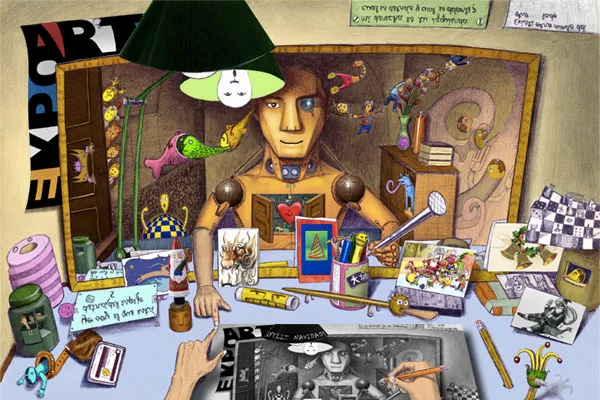
Heart of Artist by Kouji O from the Global Gallery
In the Indian subcontinent, where different languages are spoken from one geography to another, when filmmakers run out of ideas for a new movie, they remake an already released movie in a different language and release it in another part of the country. Most of the times, the remade movies fail to click in the minds of the audience because the way in which the movie was initially made suited those audience for whom it was actually made. The filmmaker remade the movie to a completely new audience, without considering the cultural differences in the new geography. Education-leaders have several lessons to learn from this scenario:
  1. Copying an idea is OK, but try to be innovative
  2. Use your experience and skills, don’t just be a copy-paste machine
  3. Know your audience
Leaders working in the field of education must know that something that worked well in a different geography may not work exactly the same way in their respective geographies, however great an idea it is or however successful project it might be elsewhere. At the same time, education-leaders could learn from those successful projects and adopt it to their geography taking into account the new context. When education-leaders see an innovation elsewhere, they should first evaluate the impact it has created. Some kind of an action should have happened. If the education-leaders are searching for ‘innovation’, they need to get facts on action that had actually been taken. A new idea is not an innovation. Innovation requires focus on process; it requires that we pay as much attention to how education is delivered, as to which aspects are covered or the tools employed in the process. It is the realization of an idea in action that constitutes genuine innovation. The action to be considered as innovative need not be always new. Like the filmmaker, education-leaders could easily copy an idea. What matters here is, to see the innovation in the new context. In a country where education means testing the students’ memory through year-end exams, for example, the introduction of formative assessment could be seen as an innovation. Education-leaders should be reflexive. An experience becomes knowledge when a person reflects on the experience and uses it. The education-leaders should add their knowledge to the newly adopted innovation so that they have some kind ownership in the whole process. The innovation and the education-leaders’ knowledge should be aligned with the needs and environment of the audience. Otherwise, the whole project would become a time-wasting exercise for everyone involved. Thus, education-leaders should search for innovations and adopt it to their condition by value adding with their knowledge and taking into account the realities of their audience.