



Panorama archive · Education
A culture of more, or a culture of better?
Originally published
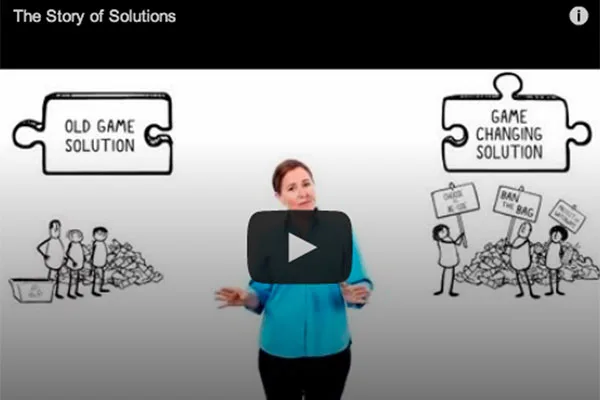
The video "The Story of Solutions" sends an obvious message: more does not mean better.
In the video, she’s talking about economics and GDP—how countries become so fixated on producing more stuff, because that’s how they “win” the game, that producing better stuff takes a back seat.
She might as well be talking about education, too.
The same more-is-better rat race that our economies are in has trickled down into our schools. We assign more projects, more homework, and more content than ever before, and students try to fill their transcripts with as many clubs and activities as they can. All because we think this is what it means to be rigorous, and this is how we win.
But more is not better, and more is not rigorous. In fact, more has probably made us worse.
Here’s how.
Let’s take a common example: presenting. At some point in our schooling, all of us have had to do a presentation for one of our classes. Typically, you’d get the assignment, do the research, plan the presentation, you might get one trial run (maybe not), and then you’d present it to the class. The teacher would give you some feedback, maybe your peers would as well, you’d get a grade, and that’d be that.
You’re done. Next assignment.
And maybe the next project or worksheet or text would connect to what you were doing, but one thing’s for sure: regardless of how well or poorly you did on the presentation, you probably didn’t get to do it again.
Why? Because the class had to move along, cover more stuff, and keep the rat race alive.
For a long time I was a believer in the more-is-better mentality. It just felt good saying, “I did x number of projects and had the kids read x number of books.” After all, the greater the number “x” was, the more I thought the students were learning, and the more successful I felt.
But this semester in the Innovation Academy, we’ve changed the game. Instead of trying to rush through three or four projects, we’re doing one in-depth project that we can focus on, allowing us to do beautiful work and learn deeply. Each student—or pair—is responsible for producing a documentary that connects economics, government and film.
Throughout the process, I’ve been amazed at the level of rigor my students have shown. They’re constantly interviewing experts, researching more information about their topics, filming and editing, writing their scripts, and planning what they’ll do next. Most importantly, they’re iterating, revising, and polishing at each stage of the project because they have time.
Rather than rushing through their script just to get it done, they’re going through several drafts in order to have a script they’re proud of.
Rather than filming something hastily and then throwing it into the documentary, they’re thinking more deeply about which shots make sense and which shots are purposeful.
And rather than watching the film one time when they’re finished, we’ll go through several different cuts in order to make sure students have crafted work that they’ll want to exhibit in front of an authentic audience.
At the end of the day, there are two games we can all play, whether it’s economics or education. One game creates a culture of stress, anxiety, and shallow learning. The other game promotes patience, craftsmanship, deeper learning and an ethic of excellence.
I choose the latter, because, as Ron Berger says in An Ethic of Excellence, "I believe that work of excellence is transformational. Once a student sees that he or she is capable of excellence, that student is never quite the same. There is a new self-image, a new notion of possibility. There is an appetite for excellence. After students have had a taste of excellence, they’re never quite satisfied with less; they’re always hungry."