
Panorama archive · Culture
International Day of the World’s Indigenous People
Originally published
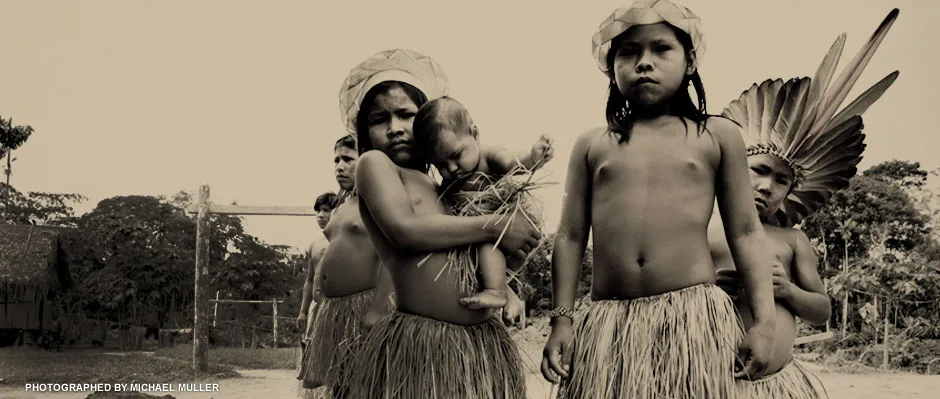
At one point in the history of humanity, we were all indigenous so when did that change? Each person was a home grown in the beginning of human time but with civilization came the rest of the world vs those who chose to remain aboriginal.
According to the Merriam Webster dictionary, ‘Indigenous is produced, growing, living or occurring naturally in a particular region or environment.’ Wikipedia puts indigenous people as‘people defined in international or national legislation as having a set of specific rights based on their historical ties to a particular territory, and their cultural or historical distinctiveness from other populations that are often politically dominant.’
So since when did remaining original become a bad thing? Since it did not embrace ‘societal standards.’ Anyone who didn’t look or act civilized was not civilized and thus should be less than human despite the fact that the very same ‘civilization’ embraces equality and human rights.
Because the aborigines remain unique and do not have a ‘president’ thus are uniquely different from societal norms, some people look down on them as perhaps being less human and more ferocious therefore their human rights are somewhat not considered. Such attitudes from us the civilized world only comes from fear of not knowing.
This World Indigenous Day, 9th August 2014, we should look to change that and positive change can only be enforced by knowledge. Read on these 10 interesting things you need to know about indigenous people.
10 INTERESTING THINGS ABOUT INDEGENOUS PEOPLE
1 Indigenous people make 5% of the world population with 70% of them located in Asia.
2 Indigenous people make one third of the world poorest people and suffer from marginalization, discrimination, high levels of disease, crime and Human Rights abuse.
3 There is no adopted definition of ‘Indigenous Peoples’.
4 Indigenous people self-identify themselves with their Indigenous group.
5 The United Nations has issued a Declaration on the Rights of Indigenous Peoples to protect their collective rights, culture and way of life.
6 Mining, building, oil constructions, logging and other big projects by corporations and/or governments threaten the habitats indigenous people live.
7 Indigenous people do stand up to protect their land and culture through demonstrations that are rarely ever heard by governments, governing bodies or other peoples.
8 Indigenous people speak their own language. There are about 5,000 Indigenous groups in the world and their languages amount to about 4,000 in number.
9 The Indigenous culture is under constant threat of climate change, war, politics and being modified with more contact to the outside world as well as a lack of education.
10 The Indigenous people are the primary caretakers of the natural environment which they depend on for survival. So they may just be the reason the climate is still working to find balance. Remember that each time you recycle for the planet’s sake.
There is so much to learn and appreciate about Indigenous people all over the world. It is up to us to rally for the preservation of their culture, land, safety, well-being and language whilst also embracing their privacy.
Treat Indigenous people as you would your ancestors because they are the closest thing to who we human were once upon a time.