







Panorama archive · Culture
Socially-conscious travel
Originally published
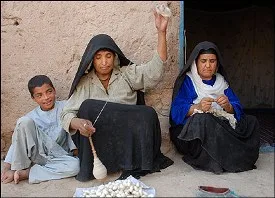
In recent years, there has been a rise in the number of tour groups offering ‘responsible tourism’, ‘volunteer trips’, and ‘socially conscious travel’. These groups advertise travel with a conscience- i.e., tours are complemented by volunteer work by which the group claims to ‘give back’ to the communities visited. While many of these programs are admirable and provide positive results to local peoples, it is important to recognize that some of these claims are little more than marketing ploys whose negative consequences will dent your pocketbook.
The advertising frenzy for socially conscious travel is creating a dangerous race to the bottom. These days travel companies compete to see who can design the most interesting local, hands-on, ‘development’ experience. If done incorrectly, this results in the exploitation of poor communities’ suffering to satisfy the vanity of wealthy Westerners.
The appeal of spending a week offering volunteer services in exchange for a lifetime of (self-defined) martyrdom appeals to the hero in all of us. However, for this goal to be realized we need for people poorer and worse off than ourselves to exist, and we need to be able to provide them with superior circumstances. This reinforces a hierarchy of superior over subordinate, allowing Us to condescend to aiding Them and enabling us to feel good about ourselves, while simultaneously making the travel companies a few bucks.
This, however, is the worst case scenario. While some travel companies seek out the poorest of the poor in order to provide Westerners with the chance to be a saviour for a day (at the right price, of course), many organizations engage in socially conscious travel for the actual social benefits. The problem, of course, is sorting the good guys from the bad.
When assessing the merits of a travel company that claims to pursue social justice you must consider a few things. By asking yourself the following questions and learning about an organization before travelling with them, you can ensure that you are engaging with an organization which is legit:
- Who founded the organization? Was it founded by a religious group, a local group of people or an international organization? It is arguable that secular, grassroots organizations are more likely to be dedicated to development goals, and have a better understanding of the needs of people, than are foreign-based organizations.
- What is the make-up of the company? Does it have a large percentage of locals working in the organization, or is it primarily foreigners? Locals are likely better at understanding the needs of a community, and thus have a higher likelihood of success at development projects.
- What is the content of their programs? Are their programs culturally relevant and adapted to local circumstances? How much local involvement and participation went into shaping program goals and expectations?
- What is their long-term track record? Do they remain engaged with the community over significant periods of time or is it a one-shot deal? Short-term engagement can indicate a lack of commitment to sustaining change and improving livelihoods.
- Have their programs been evaluated for effectiveness? Have people said whether or not they benefited from the programs? If not, it may be that the organization is more interested in advertising socially-conscious travel than in effecting real change on the ground.
- From where does their funding come? To where does the majority of their funding go? Annual reports should be transparent and companies should be clearly accountable for the projects they engage in.
- How are their programs implemented? Are they hand-out programs or do they involve skills-training and livelihood-building so that people can become self-sustaining rather than dependent? Oftentimes short-term construction or maintenance projects are the simplest ways to incorporate social justice into travel tours. However, if there is no training of locals to maintain the sites once the travellers have left, the positive results of the work are negligible.