

Shevnin
View artist portfolioЭКОПОСЕЛЕНИЕ
- Country
- Not recorded
- Submitted
- 2005-01-08
- License
- Legacy license code: 0


Drawing, Pencil
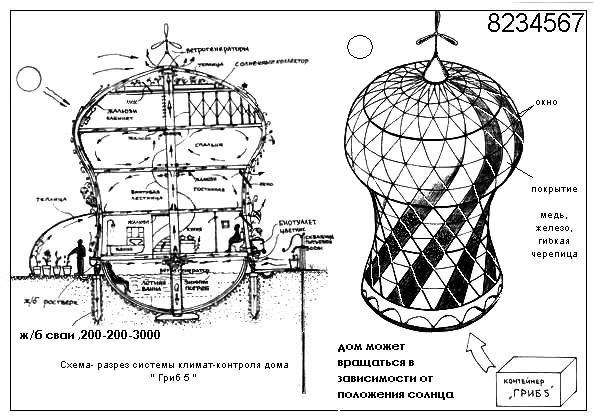
ЭКОПОСЕЛЕНИЕ
An archive of young people’s creativity. Historical comments are preserved; new submissions and comments are closed.
Historical comments (5)
Archived conversations. New comments are closed.
ДОМ-ГЕНОМ ,КАК ПРУЖИНА ЛЕТИТ АРИАН.
СПАСИБО TIG ЗА ВОЗМОЖНОСТЬ УЧАСТВОВАТЬ В HABITATJAM.COM
СПАСИБО TIG ЗА ВОЗМОЖНОСТЬ УЧАСТВОВАТЬ В HABITATJAM.COM
СПАСИБО TIG ЗА ВОЗМОЖНОСТЬ УЧАСТВОВАТЬ В WWW.HABITATJAM.COM
Methods and Results
Building New Parts
Methods included synthetic DNA, PCR of natural genes, and reversal of existing parts.
Building new parts using synthetic DNA required that we determine the desired sequence, order the DNA to be made, anneal the oligos, ligate into pSB1A2, and verify using sequencing. This method was used to build the HixC, Recombination Enhancer (RE), and the Reverse RBS.
The process of PCR required us to locate the gene and design appropriate primers, isolate genomic DNA, work to optimize the PCR reaction, purify the band, and clone the gene into pSB1A2. This method was used to make Hin recombinase from Salmonella, Hin recombinase with an LVA tag, and three antibiotic resistance genes from E. coli.
To build reverse parts, we used a procedure that we affectionately call the PCR Switcharoo. Here, we designed the primers with the biobrick prefix and suffix switched. These primers were also complementary to the part. We purified the Xba1/Spe1 fragment of the part, amplified and purified the fragment, then cloned it into pSB1A2. We used this method to create the reversed pBAD promoter and three reversed antibiotic resistance genes.
In our design of the construction, we wanted to attempt to control the flipping process. IPTG turns on the Hin recombinase which in turn induces the flipping of segment of DNA between two HixC sites. Here, recombination occurs without gene expression in the target. We then introduce Arabinose which induces the pBAD promoter and, hence, gene expression in the target. We can then use restriction digestion to measure recombination.
Basic Parts Made Parts constructed in this project by the Missouri Western and Davidson iGEM teams:
http://parts.mit.edu/r/parts/partsdb/pgroup.cgi?pgroup=iGEM2006&group=iGEM2006_Missouri
Flipping DNA
One pancake and two pancake constructs were made and tested for flipping. Restriction mapping was used to verify that flipping was occuring in one pancake constructs. Since in these experiments the Hin recombinase expression cassette had not be intentionally induced, the flipping was occurring spuriously.
Additional experiments are underway to measure flipping genetically with Tet resistance and to test two pancake constructs.
Modeling Modeling came into play in several phases of the project.
1. Modeling was used in the building of the biological system. In particular, attention was paid to the order in which intermediates were constructed so as to maximize the number of intermediates that could be used to make controls for our experiments and for eventual future constructs with more pancakes.
2. Given two pancakes, there are eight possible constructs. Modeling was used to help determine which of the constructs would be the most valuable for our investigation of the flipping mechanism. This becomes a much larger concern very quickly as the number of pancakes increases. There are 48 possible 3-pancake constructs and 384 possible 4-pancake constructs. The larger scale constructs represent an opportunity for further exploration. We have attempted to make intermediates that would be helpful in the investigation of this or other larger scale investigations.
3. We anticipate using modeling to deduce the kinetics of the pancake flipping and to detect any size or location biases associated with the flipping in the multiple-pancake problem.
Single pancakes The problems of read-through - uncontrolled Tet expression, uncontrolled flipping New pSB1A7 vector: insulates, but is not compatible with parts carrying double terminators Designing pancakes without TT\'s
Two pancake constructs Biological equivalence - distinguishing 1,2 from -2,-1 using RFP-RBS, updated panckaes
[edit]
Conclusions
Potential consequences of our devices include:
1. data storage
2. possible applications for rearranging transgenes in vivo
3. proof-of-concept for bacterial computers
4. first in vivo controlled flipping of DNA??
5. if controlled, the possibility of reversing ANY standard biobrick, thus nearly doubling the size of the iGEM registry
During the course of the summer, many lessons were learned -- in addition to the molecular biology and mathematics involved in our problem.
1. Troubleshooting
Setbacks were encountered along the way, including human errors, erroneous procedures, faulty materials, and limitations of equipment, time, and money. Through creative thinking and teamwork with our Davidson collaborators, most of these setbacks were overcome.
2. Communication
Through the wonders of the technology, we were able to communicate on a nearly daily basis throughout the summer between institutions that are literally 1000 miles apart. We worked on our combined project with no face-to-face meeting of the teams or the team leaders. We all anticipating our first meeting at the 2006 Jamboree.
3. Teamwork
The concept of teamwork came into play on several different levels during this project. On one level was the interaction between the individual members on our team. Each person has different interests and career aspirations, yet we were able to pull together utilizing each person\'s strengths while acknowledging but accepting each person\'s weaknesses. Second, was the interdisciplinary interaction. There were clearly times when each of the disciplines led the charge toward getting a better understanding of the situation. Last, but certainly not least, was the teamwork between the Missouri Western team and Davidson College team. Each team had its strengths. Davidson College participated in iGEM 2005 whereas this was Missouri Western\'s first year. Missouri Western was able to get started two weeks earlier than the Davidson team, however, and played a crucial role in the formulation of the framework for the problem (although the original suggestion of working on the Pancake Problem came from Dr. Heyer of Davidson). Finally, while Davidson excelled at performing some of the biology procedures, Missouri Western students contributed through being very good at working with polyacrylamide gels -- ideal for working with some of the smaller segments of DNA. Overall, this was an extremely successful collaboration. Many thanks to our teammates at Davidson.
4. Publicity
Working as a part of iGEM has garnered the attention of our school\'s administration and of the local press. We were proactive in seeking out positive press. As you may be aware, biotechnology is a current hot topic in the state of Missouri. We have had favorable write-ups in both the local newspaper and a campus publication. We anticipate more positive coverage on our return from the Jamboree.
5. The mathematics and biology meshed well in this project. There was plenty for members with emphasis in both areas to stay engaged with the project. This particular choice of project was ideal for the members of our combined team.
6. Multiple campuses can increase the capacity for both learning and product. Through communication and cooperation, we have shown that it is possible for multiple institutions to work together on a single project. Size of school does not seem to be a limiting factor.
7. Lastly, we had a blast and learned a lot of molecular biology, a lot of mathematics, a lot about the process of research, and a lot about the benefits of collaboration.
It was a great flippin\' summer!!